

Feeding Therapy for picky eating & starting solids in Denver. Calmer mealtimes start here.
Play-based, pressure-free feeding therapy that helps kids explore new foods, build eating skills, and grow comfortable with different tastes and textures—one step at a time, at their own pace.
✓ No referral needed
✓ SOS Approach to Feeding
✓ Never forced, never pressured

It’s rarely “just picky.”
When mealtimes end in tears, gagging or the same three foods on repeat, it’s exhausting for the whole family. Very selective eating is rarely a child simply refusing to try.
Sensory differences, oral motor skills, anxiety, uncomfortable past experiences or digestive concerns can all make eating feel hard. More pressure at the table usually makes it harder. We help you find what’s underneath it and build skills step by step.

SIGN WE CAN HELP
Does this sound like mealtime at your house?
No referral needed. If any of these feel familiar, we’d love to connect.

What is feeding therapy?
THE BASICS
Feeding therapy helps infants and children build the skills, confidence and comfort that make eating easier. We support babies starting solids, toddlers with a shrinking list of foods, and kids who struggle with textures, chewing, gagging or anxiety around eating.
Following the SOS Approach to Feeding, we use a play-based, child-led approach to build the oral motor, sensory and developmental skills behind successful eating. The goal isn’t just more foods on the plate. It’s less stress at the table.
We will never force your child to eat.
No pressure, no punishment, no “one more bite.” Kids explore food at their own pace, and trust comes first.
WHAT A SESSION LOOKS LIKE
Small steps toward more comfortable eating
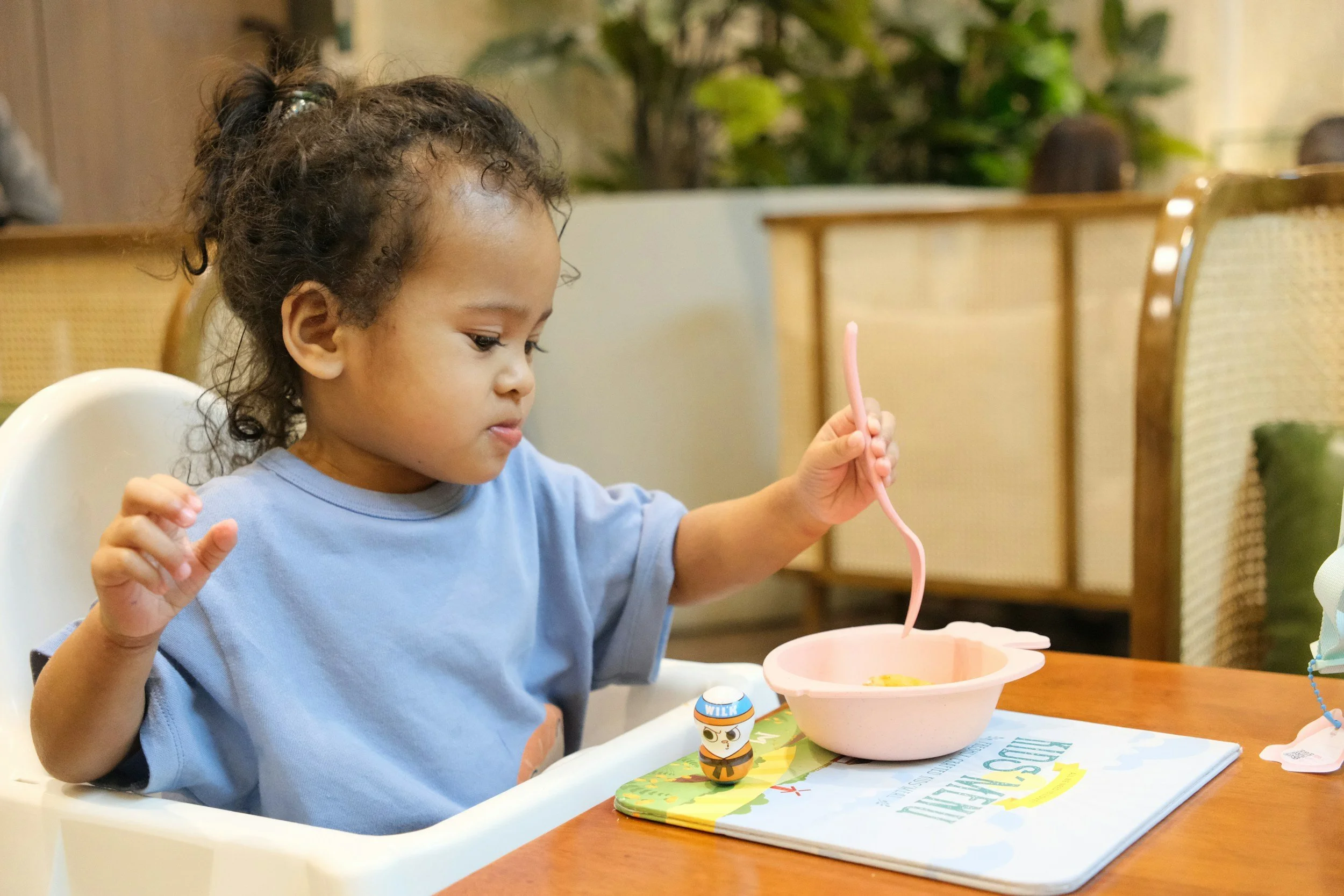
Through purposeful play, we help your child explore foods and build the sensory and movement skills needed for eating. Sessions may include getting comfortable with new smells and textures, practicing chewing skills, finding supportive seating, and coaching parents—all at a pace that respects your child’s readiness.
Sensory-informed
We address texture aversion, smell sensitivity and oral sensory needs.
Oral motor focused
Chewing, swallowing and mouth coordination for safe, comfortable eating.
Whole-child view
Posture, digestion, regulation and development all shape how a child eats.
Real strategies for home
Practical mealtime routines you can use at your own table, every day.

Your path to calmer mealtimes
1
Tell us what’s going on
Call or send a request. We reply within one business day to answer your questions.
2
A feeding evaluation
We look at your child’s eating history, oral motor skills, sensory needs and posture, and watch how they interact with food.
3
A plan for your table
After the evaluation, we typically recommend a 12-week feeding program with play-based sessions and practical home strategies to support progress at your family’s table.

Your questions, answered
Is picky eating normal?
1
Some is, especially in toddlerhood. Therapy can help when mealtimes are stressful, food variety is very limited, growth or nutrition is affected, or eating gets in the way of daily life.
What ages do you work with?
2
Infants, toddlers, children and teens. Many families come during the move to purees or table foods; others come for long-standing picky eating.
Do parents stay?
3
Yes. You’re an important part of the process, and we help you carry strategies into everyday meals.
Will you force my child to eat?
4
Never. We don’t use force, pressure, or punishment. Eating starts long before taking a bite. We help your child feel comfortable being around, touching, and exploring foods, building skills and trust along the way. Each step forward follows your child’s readiness.
What happens in a session?
Through purposeful play, your child practices the steps that lead to eating—from getting comfortable with a food’s smell and texture to learning to taste and chew it. We tailor activities to your child’s skills and readiness, with coaching to help you support progress at home.
5
Should I bring food?
We provide the food used during your child’s therapy program. If there are specific foods you’d like us to work on, you’re welcome to bring those in!
6
What makes your approach different?
7
We look beyond what your child will or won’t eat to understand what makes eating hard. Using the SOS Approach to Feeding, we consider sensory needs, eating skills, posture, and past experiences with food. Through purposeful play and small, manageable steps, we help your child build comfort and skills while giving you practical ways to support them at home.
-
Mealtimes went from stressful to enjoyable again. Our son is trying new foods, sitting at the table longer, and feels so much more confident around eating.
-T.L
-
We felt supported from day one. The strategies were realistic, gentle, and actually worked for our picky eater without pressure or tears.
-C.W
-
Our daughter used to gag and refuse most foods, and now she’s exploring textures and asking to try new things. We’re so grateful for the care and encouragement we received.
-L.S.
Strong roots, mighty kids.
Ready to get started?
Specialized care for bowel, bladder, potty training, and feeding challenges — because every child deserves mighty roots and the freedom to just be a kid.