

Potty Training Support. It doesn’t have to be a battle.
If your child avoids the toilet, holds their pee or poop, or keeps having accidents despite your best efforts, you’re not alone. We help you understand what’s making potty training difficult and build the skills and routines that help your child move forward with confidence.
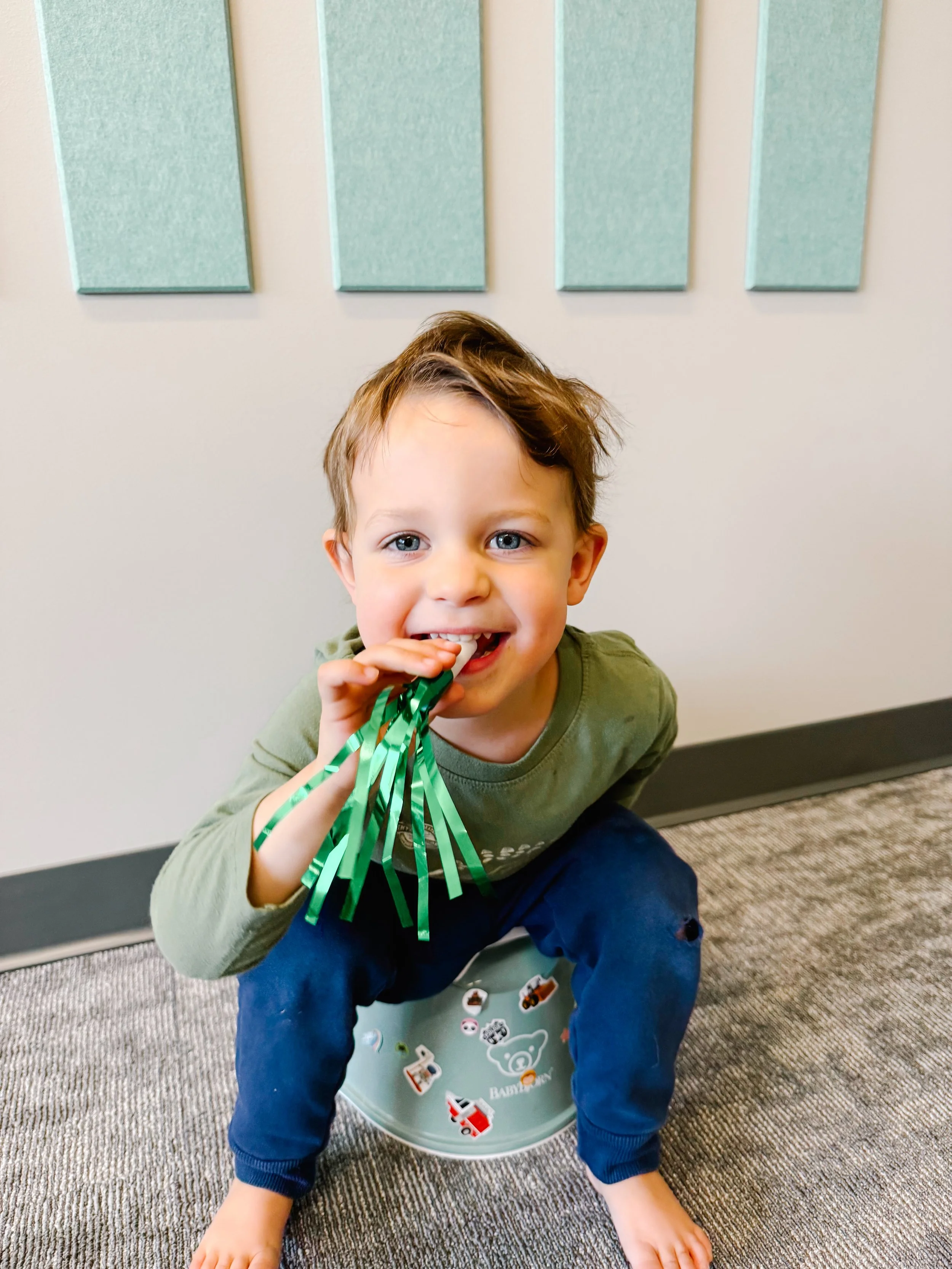

Understanding Potty Training Challenges
Potty training is about more than just readiness, it’s a complex process involving body awareness, muscle coordination, sensory processing, and emotional regulation. When any of these systems are out of sync, children may struggle to recognize when they need to go, feel anxious about the toilet, or even experience constipation and accidents.

SIGNS YOUR CHILD NEEDS SUPPORT
Common Potty Training Difficulties
These challenges are rarely behavioral. They’re often signs of discomfort, sensory overwhelm or muscle coordination difficulties.

There’s more to potty training than readiness
GETTING TO THE ROOT OF IT
Using the potty brings together body awareness, muscle coordination, sensory processing, and feeling safe and comfortable. When one of these pieces is difficult, your child may miss the urge to go, struggle to relax on the toilet, or hold pee or poop to avoid an uncomfortable experience.
Haven’t started yet?
Haven’t started yet? We also offer pre-potty training support to help you recognize readiness, build supportive routines, and make the transition feel less overwhelming for everyone.
Signs Your Child May Benefit From Potty Training Support
Constipation or painful poops
Fear, anxiety, or changes in familiar routines
Trouble relaxing and coordinating the potty muscles
Difficulty noticing the body’s signals to pee or poop
Sensitivity to toilet sounds, seats, or bathroom environments
WHAT THERAPY LOOKS LIKE
Building comfort and confidence on the potty
In pediatric pelvic floor therapy we use play-based therapy, we help your child build the skills to use the potty and give you practical strategies that fit your family’s routines.
Positive routines
Consistent, low-pressure habits that support success.
Posture & breathing
Toileting positions that make going easier.
Body awareness
Helping kids recognize their internal signals.
Strength & Coordination
Learn how their bladder, bowel, and potty muscles work together

Feel more confident about the next step
Whether your child needs in-clinic therapy or you’re looking for guidance through a potty training consultation, we’ll help you find a path forward that fits your family.
Related: Constipation in kids · Sensory challenges · Daytime accidents