

Abdominal Pain in Children.Their pain is real. Your concerns matter.
When tummy aches keep interrupting school, play, or family life, you want to understand why. Even when medical tests haven’t provided answers, your child’s pain deserves attention. We look at bowel habits, muscle tension, movement, and nervous system regulation to understand what may be contributing and help your child feel more comfortable.

“My tummy hurts”
Can mean many things. Constipation, muscle tension, stress, or difficulty making sense of body signals may all play a part. We take time to listen and look for patterns to better understand what your child is feeling.

Understanding Abdominal Pain in Kids
WHAT WE TREAT
Kids describe it as tummy aches, cramps or butterflies. Often the cause is functional: no single disease, but body systems that aren’t working well together.

Why it keeps hurting
GETTING TO THE ROOT OF IT
The gut and nervous system are closely connected, so kids can feel real pain even when every test looks normal. Our goal is to help the body move, relax and regulate so the pain eases.
Tummy aches don’t have to define their day.
We help your child work toward feeling more comfortable, so meals, play, and everyday routines can feel easier again.
Common contributors
Constipation or retained stool
Tension in the belly or pelvic muscles
Gas, bloating or sluggish digestion
Anxiety, stress or sensory sensitivities
Breath-holding or poor diaphragm, core and pelvic floor coordination
Food sensitivities or low hydration
WHAT THERAPY LOOKS LIKE
Helping your child feel more comfortable
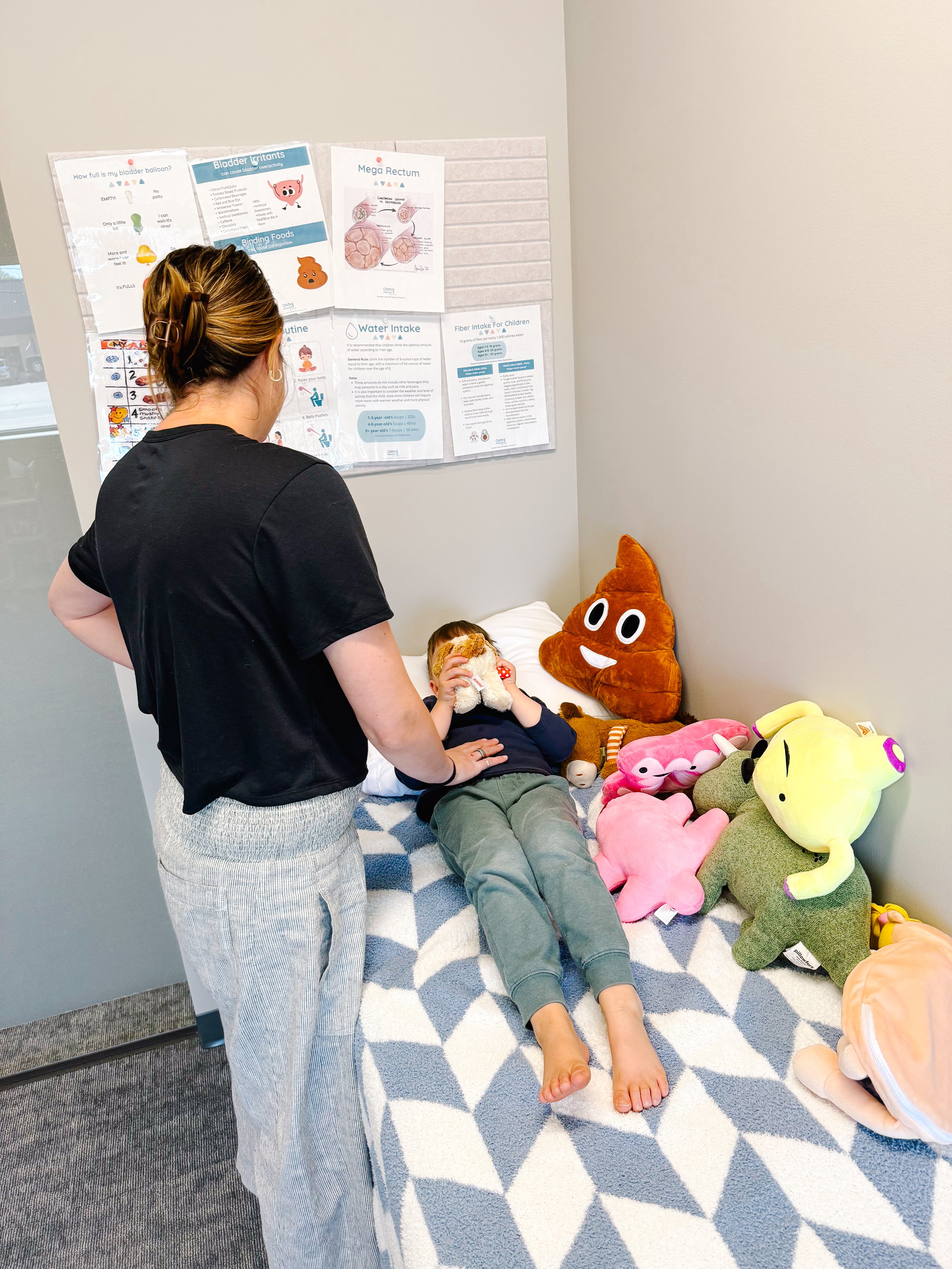
In pediatric pelvic floor therapy gentle, one-on-one sessions combine movement, breathing, hands-on techniques, and practical home strategies to address factors that may be contributing to your child’s tummy pain.
Regular, easy poops
Reducing constipation-related pain.
Releasing tension
Gentle hands-on techniques for the belly and pelvis.
Breath & movement
Strategies that support gut motility and calm the body.
Core coordination
Diaphragm, core and pelvic floor working as a team.

Let’s find a path toward relief.
Tell us what your child is experiencing. We’ll help you understand how therapy may help and connect you with other providers when needed.